
Best Shoes for Standing All Day (And Why Your Feet Are Begging for Better Support)
If you spend most of your day on your feet, you already know:
not all shoes are created equal.
Whether you’re a nurse, teacher, retail worker, or constantly on the move—your shoes can either protect your feet… or slowly cause pain.
Let’s talk about what actually matters
What Happens When You Stand All Day?
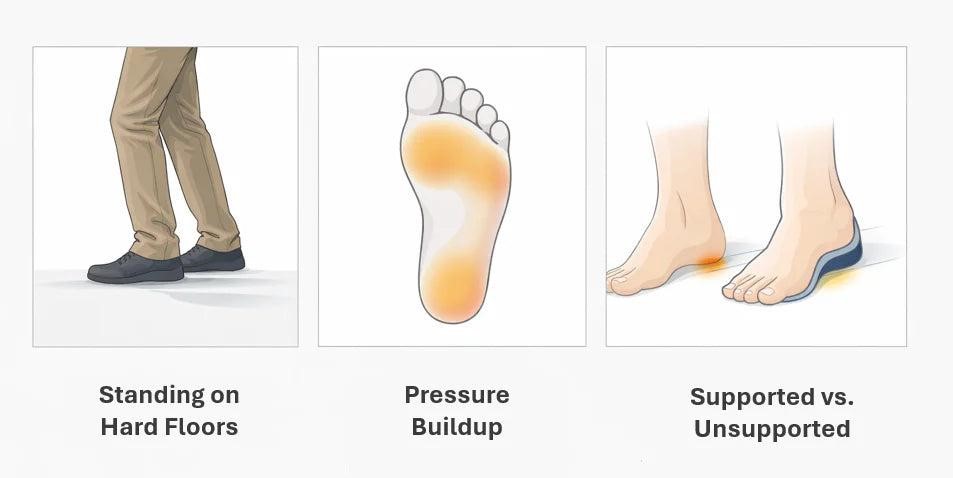
Standing for long hours puts continuous stress on:
- Your heels and arches
- The ball of your foot
- Your ankles, knees, and even lower back
Over time, this can lead to:
- Plantar fasciitis
- Heel pain
- Calluses
- Tendonitis
- General fatigue and aching
The right shoe can make a huge difference in preventing this.
What to Look for in a Good “All-Day Standing” Shoe
1. Arch Support
- Helps distribute pressure evenly
- Reduces strain on the plantar fascia
- Especially important if you have flat feet or high arches
2. Cushioning (But Not Too Soft)
- Absorbs shock from hard floors
- Prevents heel and forefoot pain
- Avoid shoes that are too squishy (they can actually increase fatigue)
3. Proper Fit (This Is HUGE)
- Enough room in the toe box (no squeezing!)
- Snug heel (no slipping)
- Try shoes on at the end of the day when feet are slightly swollen
4. Stability
- Keeps your foot from rolling inward or outward
- Helps prevent overuse injuries
- Look for a firm heel counter and structured sole
5. Shock-Absorbing Sole
- Especially important on tile, concrete, or hospital floors
- Reduces stress that travels up your legs and back
Popular Shoe Types That Work Well
While everyone’s foot is different, these categories tend to perform well:
- Supportive running shoes (great cushioning + support)
- Walking shoes with structure
- Professional clogs (popular in healthcare)
- Shoes with removable insoles (for custom orthotics)
Common Mistakes We See All the Time
🚫 Wearing completely flat shoes (like Vans or Converse)
🚫 Choosing style over support
🚫 Keeping shoes too long (yes—shoes wear out!)
🚫 Ignoring early foot pain
If your shoes are worn down, your body feels it.
When to Replace Your Shoes
- Every 300–500 miles for athletic shoes
- Or every 6–12 months if worn daily
- If you notice uneven wear or new pain → it’s time
Pro Tip: Orthotics Can Be a Game Changer
If you’re still having pain—even in good shoes—you may need:
- Custom orthotics
- Better offloading for pressure areas
- A gait evaluation
Bottom Line
If you’re standing all day, your shoes aren’t just a fashion choice—they’re part of your health care.
The right pair can mean:
✔ Less pain
✔ Less fatigue
✔ Fewer long-term problems
Struggling to find the right shoes?
We help patients every day with shoe recommendations, fittings, and custom orthotics based on their foot type and lifestyle.