
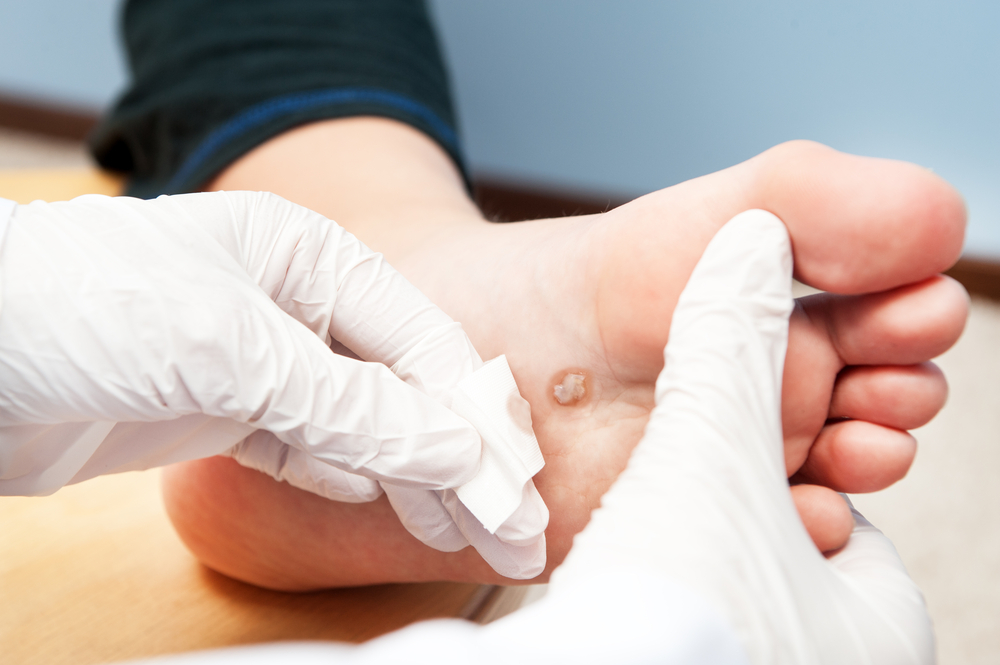
Plantar warts are small, rough growths that develop on the bottom of the foot and are caused by certain strains of the human papillomavirus (HPV). Because they often develop on weight-bearing areas, plantar warts can become uncomfortable when walking, standing, or putting pressure on the affected part of the foot.
Plantar warts may appear as rough, grainy lesions on the sole of the foot and can sometimes be mistaken for a callus. Small black dots, which are tiny blood vessels, may also be visible within the wart. Warts can spread through direct contact or exposure to contaminated surfaces, particularly in warm, moist environments such as locker rooms, pools, and shared showers.
At Illinois Foot & Ankle Center, we can examine suspicious growths on the feet, determine whether they are plantar warts, and recommend an appropriate treatment plan.
Plantar Wart Symptoms
Plantar warts can have a rough or grainy appearance and may develop as a single growth or multiple warts clustered together. Common symptoms include a small, hardened area on the bottom of the foot, tenderness when walking or standing, and discomfort when pressure is placed directly on the wart.
Because plantar warts can grow inward due to pressure from walking, they may sometimes be surrounded by thickened skin or resemble a callus. Unlike a typical callus, a plantar wart may interrupt the normal lines of the skin and contain small dark spots.
Plantar Wart Treatment
Treatment for plantar warts depends on the size, location, number of warts, and how long they have been present. Some warts may eventually go away without treatment, but others can persist or become increasingly uncomfortable. A foot and ankle specialist can recommend treatment based on your individual condition.
Professional treatment options may include topical medications designed to remove wart tissue, freezing treatments, or other procedures to destroy the wart. Multiple treatment sessions may sometimes be needed, particularly for stubborn or recurring plantar warts.
How to Prevent Plantar Warts
Plantar warts are contagious, so taking steps to limit exposure can help reduce the risk of developing or spreading them. Avoid walking barefoot in communal areas such as public showers, locker rooms, and pool decks. Wear clean socks and shoes, and avoid sharing footwear, towels, or other personal items that come into contact with the feet.
Keeping your feet clean and dry can also help maintain healthy skin. Avoid picking or scratching a wart, as this can potentially spread the virus to other areas of the foot or to other people.
When to See a Podiatrist for Plantar Warts
A plantar wart may require professional evaluation when it becomes painful, changes in appearance, spreads to other areas, or does not improve with basic care. It is also important to have an unfamiliar growth examined because other foot conditions can sometimes look similar to a plantar wart.
At Illinois Foot & Ankle Center, our foot and ankle specialists can evaluate the growth, confirm the diagnosis, and recommend appropriate treatment to help relieve discomfort and reduce the chance of recurrence.